
Have you ever been uncomfortable while shoe shopping because you weren’t familiar with the footwear industry’s jargon?
It’s one part frustrating, one part embarrassing, and one part nerve-wracking.
Anytime you spend good money on something, you should have a baseline knowledge of how it works. This is why we tend to bring car-savvy friends to the dealership and take a trusted tailor’s advice on what can and cannot be altered on a suit.
To truly appreciate fine craftsmanship and make smarter, more informed investments in your footwear, you must arm yourself with the correct information. Accordingly, understanding the anatomy of a shoe is the key to mastering the nuances of quality, comfort, and style.
This guide moves beyond a simple glossary. Its mission is to be the most comprehensive and authoritative educational resource for a gentleman seeking to understand the components of a dress shoe. Read on as we explain not just what each part is, but why it matters.

We independently choose the brands we feature on BespokeUnit. If you purchase through our links, we may earn a commission at no extra cost to you.
Anatomy Of A Dress Shoe
The diagram below offers a broad overview of the most recognized landmarks of a dress shoe.
Below the diagram, you’ll find various quick links that take you to a more specific explanation for each of these items and additional images explaining the anatomy and corresponding function.
Decorative & Style Elements
- Brogueing (Perforations & Pinking)
- Medallion
- Loafer-Specific Terms
- Tassel
- Kiltie
- Beef Roll
- Penny Keeper
The Foundation – The Sole Assembly
The soul of a shoe is in its sole. These often-unseen components below your foot are the true determinants of a shoe’s durability, comfort, water resistance, and longevity.
The Last
Before any piece of leather is cut, there is the last. The last is the solid, foot-shaped form, traditionally carved from wood, that dictates the shoe’s entire shape, volume, and fit.

Stefano Bemer Wooden Lasts
Every subsequent component is stretched over and molded to the last, making its design the true starting point of the shoemaking process.
Outsole
Also known simply as the “sole,” this is the part of the shoe that makes direct contact with the ground as you walk.

While traditionally made of leather, outsoles can also be crafted from rubber or synthetic materials for enhanced grip and durability. For better traction on leather soles, many gentlemen opt to add a rubber “topy” (a protective half-sole) or have a rubber “top piece” installed on the heel.
Heel

The heel is the raised portion at the back of the shoe that your foot’s heel rests upon.
In quality footwear, it is typically constructed from layers of stacked leather and finished with a durable top piece (the part that contacts the ground) made of leather or rubber. A well-made heel provides height, shock absorption, and support.
Finer shoes may feature a “Gentleman’s Corner,” a small, beveled notch on the inner edge of the heel designed to prevent it from snagging on one’s trousers.
Welt
The welt is a crucial strip of leather that runs along the perimeter of the outsole. Its primary function is to join the upper to the sole, creating a secure bond and a barrier against moisture.

Miyagi Kogyo Factory
The method of stitching the welt is a key differentiator in shoe construction; in a Goodyear welted shoe, for instance, the upper is stitched to this dedicated piece of leather, a hallmark of durable and easily repairable footwear.
This is a complex topic, which you can explore further in our complete guide to shoe construction methods.
Midsole & Filler
Sandwiched between the insole and the outsole, the midsole provides thickness and durability. In high-quality welted shoes, the space between these layers is filled with a layer of granulated cork.
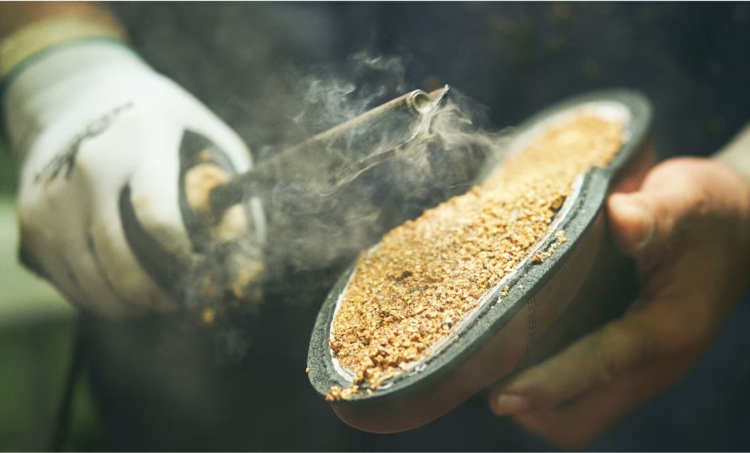
Allen Edmonds Shoes with Cork Midsole
This cork filler is a critical feature; over time, it compresses and molds to the unique shape of the wearer’s foot, creating a personalized, custom-like fit.
Cheaper, mass-market shoes often use foam or synthetic fillers that lack this adaptive quality.
Shank
The shank is the hidden spine of the shoe—a rigid piece of steel, wood, or fiberglass that rests between the insole and the outsole, typically in the narrow waist of the shoe.
This component is essential for providing structural integrity and crucial arch support for the wearer’s foot. Should the shank ever break, it is the equivalent of totaling a car and cannot be fixed.
Insole
The insole is the foundational layer inside the shoe that makes contact with the sole of your foot.

In premium welted shoes, the insole is a robust piece of leather that serves as the anchor point for the stitching that holds the shoe together. This is distinct from a removable “footbed” or cushioned sock liner that may be placed on top of it.
Waist
The waist is the narrowest part of a shoe’s sole, located directly under the arch of the foot. A well-defined, narrow, or “beveled” waist is often a signifier of fine shoemaking, as it tends to offer superior arch support and a more elegant silhouette.
The Architecture – The Upper
The upper refers to all of the combined components above the sole. It is the most visible part of the shoe, defining its style, silhouette, and character.
The upper of dress shoes tends to be made of leather. On the other hand, the upper of athletic shoes is usually made of knit fabric or other modern materials.
Vamp
The vamp is the section of the upper that covers the forefoot, extending from the toe area back to the lacing system. As this is the part of the shoe that flexes most during walking, its quality and creasing pattern are key indicators of the leather’s grade.

Quarters
The quarters are the side and rear panels of the upper that wrap around the heel and extend forward to meet the vamp. The construction of the quarters is what authoritatively defines the two most fundamental dress shoe styles:
- Oxfords (Balmorals): Feature a “closed-throat” lacing system. The quarters are stitched underneath the vamp, creating a clean, sleek V-shape at the laces. This is the more formal style.
- Derbies (Bluchers): Feature an “open-throat” lacing system. The quarters and facings are stitched on top of the vamp, creating two small flaps that open wider. This allows for more adjustment and is considered slightly less formal.

The term “quarter” is often a point of confusion, as there are only two of them. The name likely derives from its historical use in naval and animal anatomy to denote a rear section of something, such as a ship’s “stern quarter” or an animal’s “hindquarters”.
Toe Box & Toe Cap
The Toe Box is the area of the shoe in which the toes reside. It contains an internal stiffener (sometimes called a “toe puff”) that provides structure and protects the toes.

Amberjack Cap-Toe shoes with Perforated Toe Cap
The Toe Cap is the external, stylistic piece of leather stitched over this area.
The design of the toe cap is a primary style element, defining types like the Plain Toe, Cap Toe, Wingtip, and Split-Toe, which you can learn more about in our ultimate guide to shoe styles.
Tongue
The tongue is the strip of leather that rests atop your foot’s instep on a lace-up shoe. It sits underneath the laces and facings, protecting the foot from the pressure of the laces.

Tongue on Beckett’s Morgen Trainers (GATs)
Eyestay & Eyelets
The Eyestay is the reinforced area on the quarters where the eyelets are located.

Reinforced Eyelets on Boots
The Eyelets are the small, often metal-rimmed holes through which the laces are passed. A typical dress shoe may have five eyelets per side, while boots can have nine or more.
Heel Counter & Backstay
These two parts work together to structure the rear of the shoe.
The Heel Counter is the firm, internal stiffener that cups the back of your heel, providing support and preventing the shoe from collapsing.

Internal Heel Counter on Crown Northampton Harlestone Derbies
The Backstay is the external, vertical strip of leather that covers the seam where the quarters are joined at the back, reinforcing this critical stress point.

Backstay Of Suede Loafers From Amberjack
Topline & Collar
The Topline is the top edge of the shoe’s opening where you insert your foot. In more casual shoes or boots, this area may be padded for extra comfort and is then referred to as the Collar.

Oliver Cabell Low 1 Sneakers with Padded Collar
The Finishing Touches – Decorative & Style Elements
These elements are typically non-structural but are essential in defining a shoe’s character, formality, and aesthetic appeal.
Brogueing (Perforations & Pinking)
Brogueing refers to the decorative elements found on brogue shoes.
This includes Perforations (the small holes punched into the leather) and Pinking (the V-shaped, sawtooth cuts along the edges of the leather panels).

These details are purely aesthetic and do not typically pass all the way through the leather.
Medallion
A medallion is an elegant, often intricate pattern of perforations located on the toe cap of a shoe. (See image above)
Loafer-Specific Terms
These decorative elements are unique to slip-on loafer styles:
Tassel: Decorative pieces of leather or suede that hang from the vamp of a loafer.

Black Tassel Loafers
Kiltie: A decorative, fringed tongue of leather that sits atop a loafer’s vamp, often combined with a tassel. This feature has its origins in vintage golf shoes, where it served to protect the player’s shoes from mud.

Lethato Kiltie Shoes
Beef Roll: On some penny loafers, the stitching on the sides of the vamp is hand-sewn into a thick, cylindrical shape that resembles a beef roast tied with string, lending the shoe a more casual, robust character.
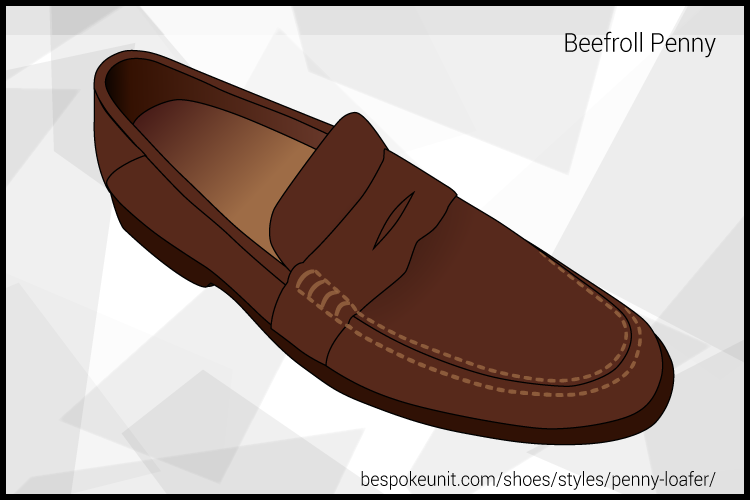
Beefroll Penny Loafers
Penny Keeper: The signature strap of leather that runs across the vamp of a penny loafer, featuring a cutout in the middle. The name originates from a trend among Ivy League students in the 1950s, who would keep a penny in the slot for good luck or emergency phone calls.

Closing Thoughts
Good shoes cost good money, and it’s important to know what you’re buying.
Having a firm grasp of these terms will enable you to speak intelligently with salespeople, better understand product descriptions, and ultimately distinguish the artisans who want to help you from those who just want your money.
You are now equipped with the knowledge to build a truly exceptional and long-lasting footwear collection. Go forth and let us know what you buy in the comments below!


Shoe Content


Back in the fifties there was a leather shoe you could close with one hand and it was quite popular with young boys. I believe it was referred to as a grasshopper shoe. It had a reinforced tongue with two wires on each side that would draw each side of the shoe together when it was closed so that the wearer didn’t need to tie or zip the shoe to wear it. The tongue was flipped forward to loosen the shoe and then pressed to the instep to close it. I had a pair and thought they were quite neat, but they went out of style and you don’t hear of them anymore. Do you have any thoughts on this?
Hi Thomas,
This is honestly the first time that I’ve heard of the grasshopper shoe!
I did a little research and couldn’t find anything, unfortunately. It’s a shame as the concept sounds quite original! It actually seems that there’s a brand called grasshopper that does have an unusual design but is tied with regular laces.
All the best,
CP
Thomas, I remember those shoes. We called them Flagg Flyers.
Those types of shoes also were known as Flap Jacks.
I think the quarter gets its name either because it covers the rear quarter of your foot or because each one makes up one quarter of the upper.
For contrast, animals have hind quarters and fore quarters, and the side of a ship above the water but behind the waist is called the stern quarter, hence the “quarter deck”. The word “Quarter” is frequently used to indicate the location on something.
Hi Claude,
I always assumed that it was a reference to the rear of the foot too personally. I guess the original author didn’t come across this during their “extensive” research! Thanks for your input, Claude!
All the best,
CP
What is the name of the shoe at the top of your web pages home screen? I love it and want a pair?
Hi William,
I’m not entirely sure but I know that Taft have a similar model!
Best,
CP
Those Grasshoppers were also known as Snapjacks. My brother had a pair from a pop shoe store when he was a teenager.
Ah, interesting! Thanks for the infor!
On laced dress shoes there two styles of vamp to hold the holes
for the laces. On one style the two sides are connected just below the lace holes closest to the toe box. The other style the two sides are connected only by the shoe laces. What are the two styles called?
Are you referring to derby and Oxford style shoes? Otherwise, it’s hard to picture what you’re trying to describe, sorry!
Gentlemen
I own a pr of Allen Edmund’s “Randolph” penny loafers in cordovan. When I walk the sides below the saddle bow outwards. Is this normal? Thanks
Hey Dale,
A bit of this is normal as long as it’s not uncomfortable or compromising the structure of the shoe. Perhaps opting for a wider last next time would help prevent this effect, though as I mention, if it’s still comfortable to wear, I wouldn’t worry too much.
Rafael
I want to order some boots off shien, but I don’t know the shoe size CN meaning. I am a size 7 Canada, what would that be in CN?
Hey Jasmine,
Shoe Size CN refers to shoe size in the Chinese scale, which is different from shoe size scales in the US (and the UK, etc…). You can check our conversion chart between countries’ different scales here: https://bespokeunit.com/shoes/size/.
Rafael
Hello Sirs! Thank you for posting the graphic showing all shoe parts. I’m esp’ly thankful you showed the “shank,” which “no one” in shoe stores has ever heard of, apparently. That includes the snooty older salesman at the Nordstrom’s near me, who sniffed that, if the arch is well built, it won’t matter. This isn’t true. I’d had a pair of New Balance sneakers that were great (10 years!), & bought 2 of its upgrade (one for here, another at a 2nd home in Florida). But after a few hours the bones in my knees ground together. I thought this was due to my being terribly overweight. But I learned over the weekend — to my horror — that they do fold in the center. Shoes/sneakers with the shank fold 1/3 of the way from the tip. UGH!
I am disappointed that most shoes in the malls are now quite flimsy, shoe stores don’t exist like they used to, & no one seems to know anything about them…! In Nordstrom’s, $200 shoes folded in half, & even $400 Allen Edmond’s shoes folded too. Some shoes/sneakers are now made of hard plastic/rubber, so it’s tough to fold them at first (but your feet will feel it).
I still have 2 pairs of Oxfords from Bostonian that do not fold, but their leather is so worn I need new ones. I cannot find them anywhere, I’ve written to their manufacturer (no answer), & those sold online seem OK, but are just hard plastic. Life is hard! BOOO HOOO! :-)
But thank you for your wonderful graphic, & explanation that this shank does exist!
Have a wonderful rest of the day!
Are those pairs of Oxfords goodyear-welted by any chance? You could bring them to a cobbler and get them resoled, if so. Certainly worth trying if you like wearing them so much.
Rafael
I never knew the names of all these parts! Your glossary is super helpful. I’m looking forward to learning more about shoe care and restoration now that I have a better understanding of the anatomy of my shoes. Thanks for the informative post!